Can You Do This Yourself
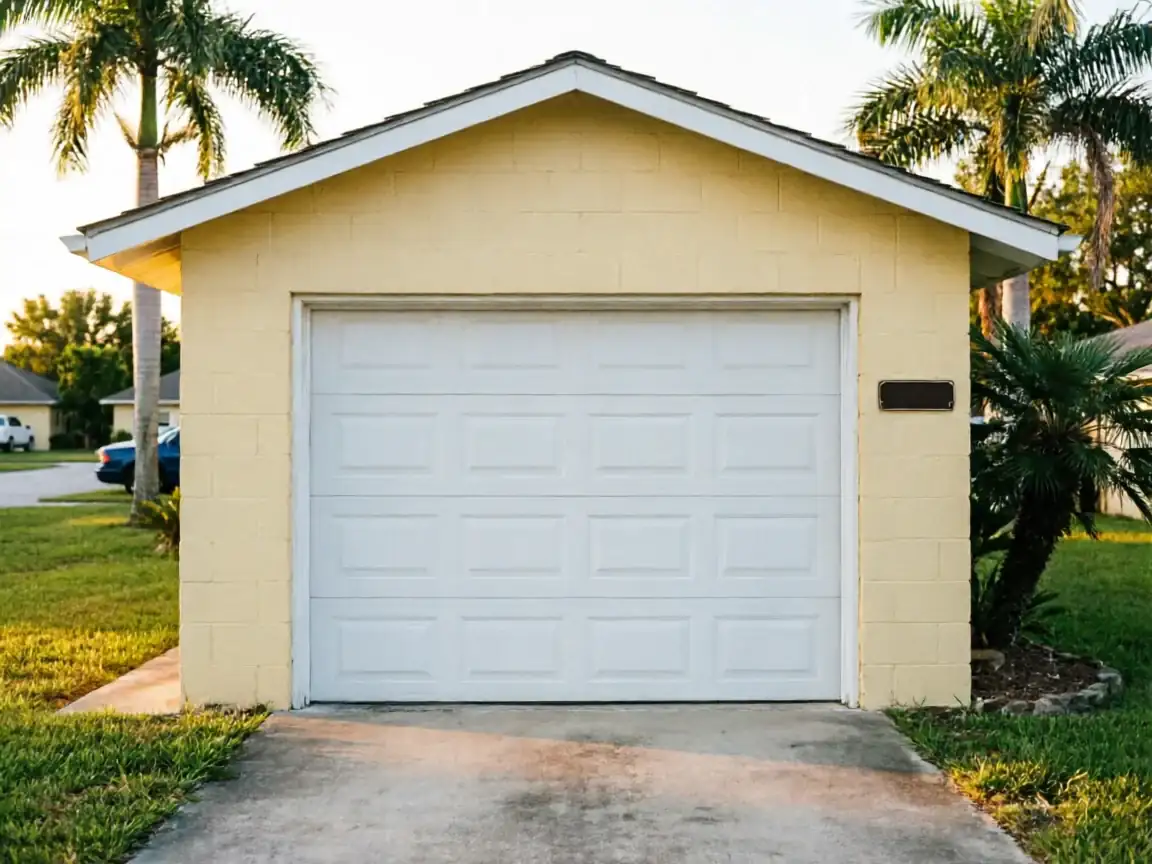
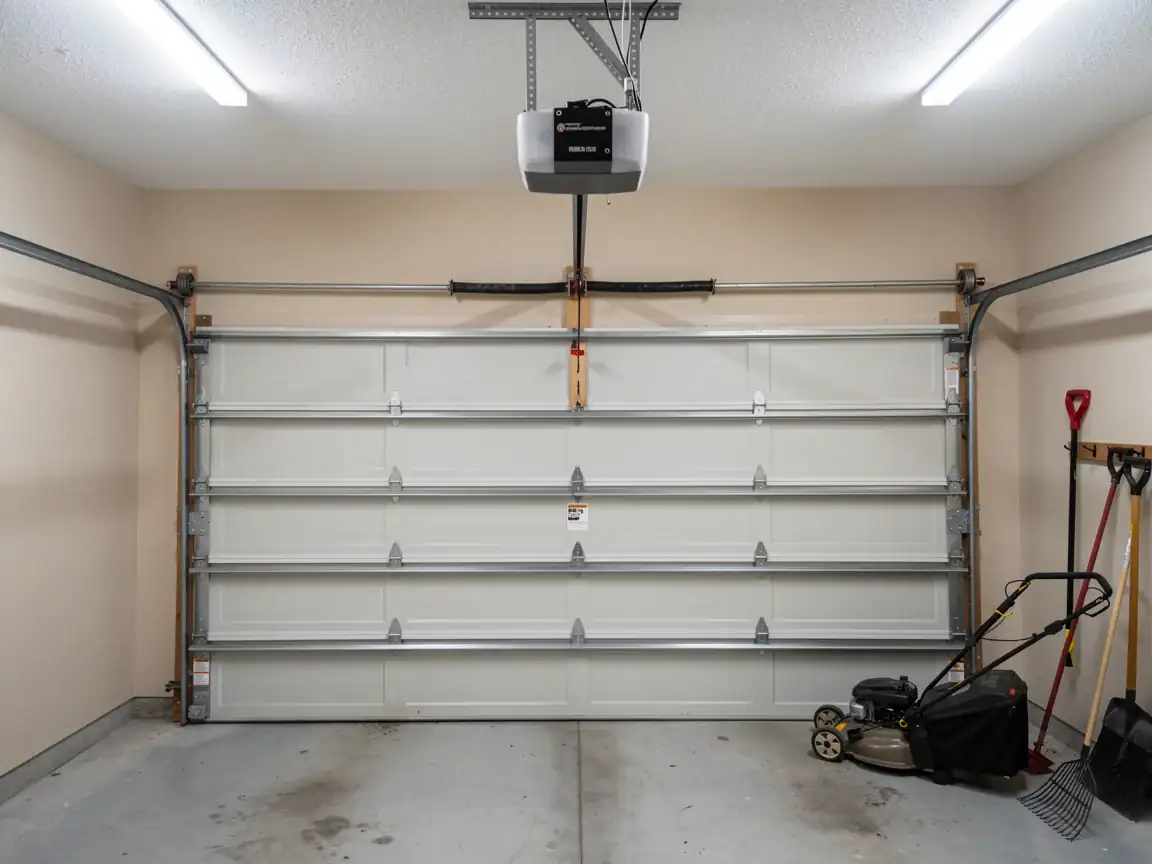
Most houses in Clarcona went up around 1987, and the garage doors that came with them are steel sectional panels on a standard 7-foot track, usually paired with a single chain-drive opener bolted to ceiling joists that were framed for exactly that unit and nothing heavier. Swapping in a new opener sounds simple until you're standing on a ladder trying to match travel limits to a door and track combination that's 35-plus years old and has sagged a little, shifted a little, and never been touched since the house was built.
The part that trips up most owners isn't the opener itself, it's the garage circuit. A lot of Clarcona garages from this era were wired for a single light fixture and nothing else - no dedicated outlet near the header, sometimes no GFCI protection at all. If your garage falls into that group, you're looking at an electrical fix before the opener fix, and that's worth knowing before you buy a unit off a shelf. We'll tell you straight if that's what we find, rather than forcing a new opener onto wiring that isn't ready for it.
How Long You Are Without the Door
We run this job out of Winter Garden, about 8 miles from Clarcona, so there's no local branch sitting around the corner - the opener, the rail, and the mounting hardware all travel with the crew on the truck. That doesn't mean a long wait, it means the job is scheduled like any other call across the service area rather than treated as a drop-in.
Once the crew is on site, the door itself usually keeps working by hand through the swap - you're not locked out of the garage while the new opener goes in. The exception is if the existing track or spring is also worn out, which isn't unusual on a door that's been running on its original hardware since the late '80s. In that case we'll say so before starting, not after.
What the Repair Takes
A straight opener swap on one of these doors is mostly mechanical
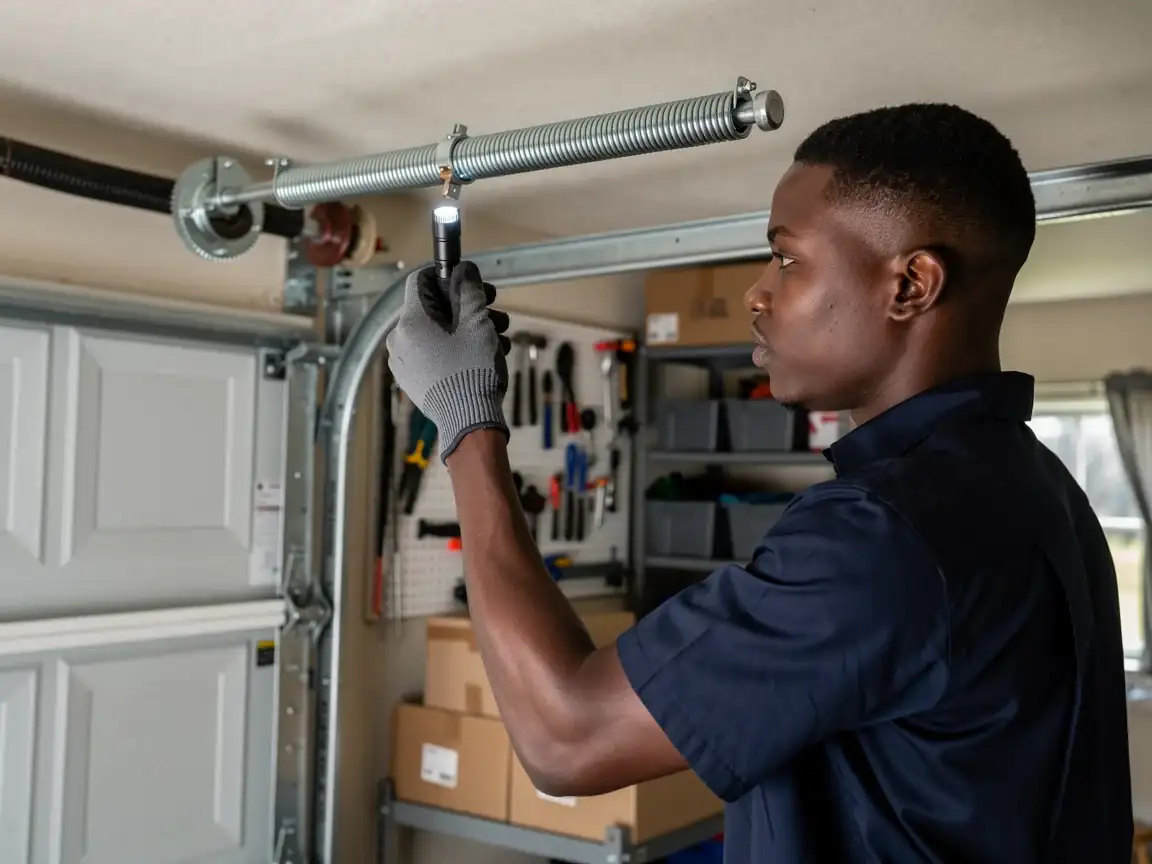
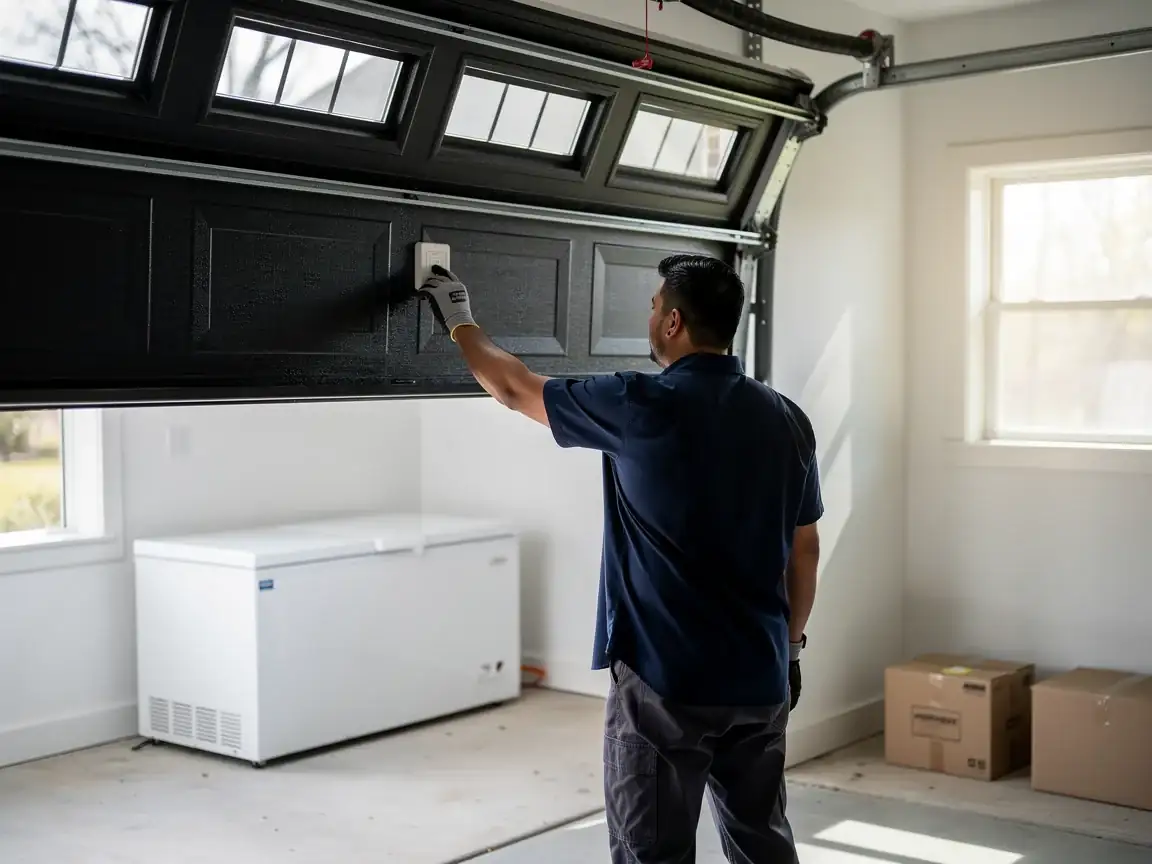
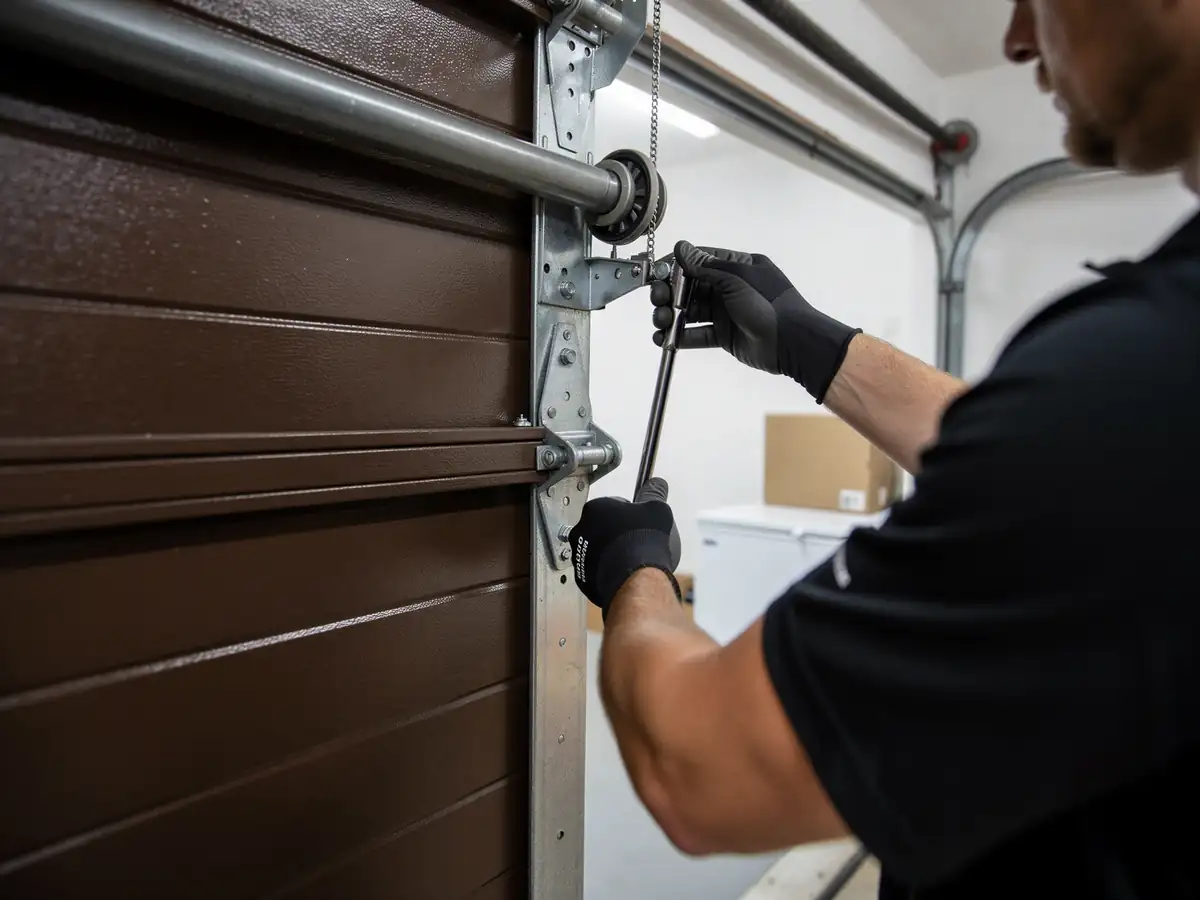
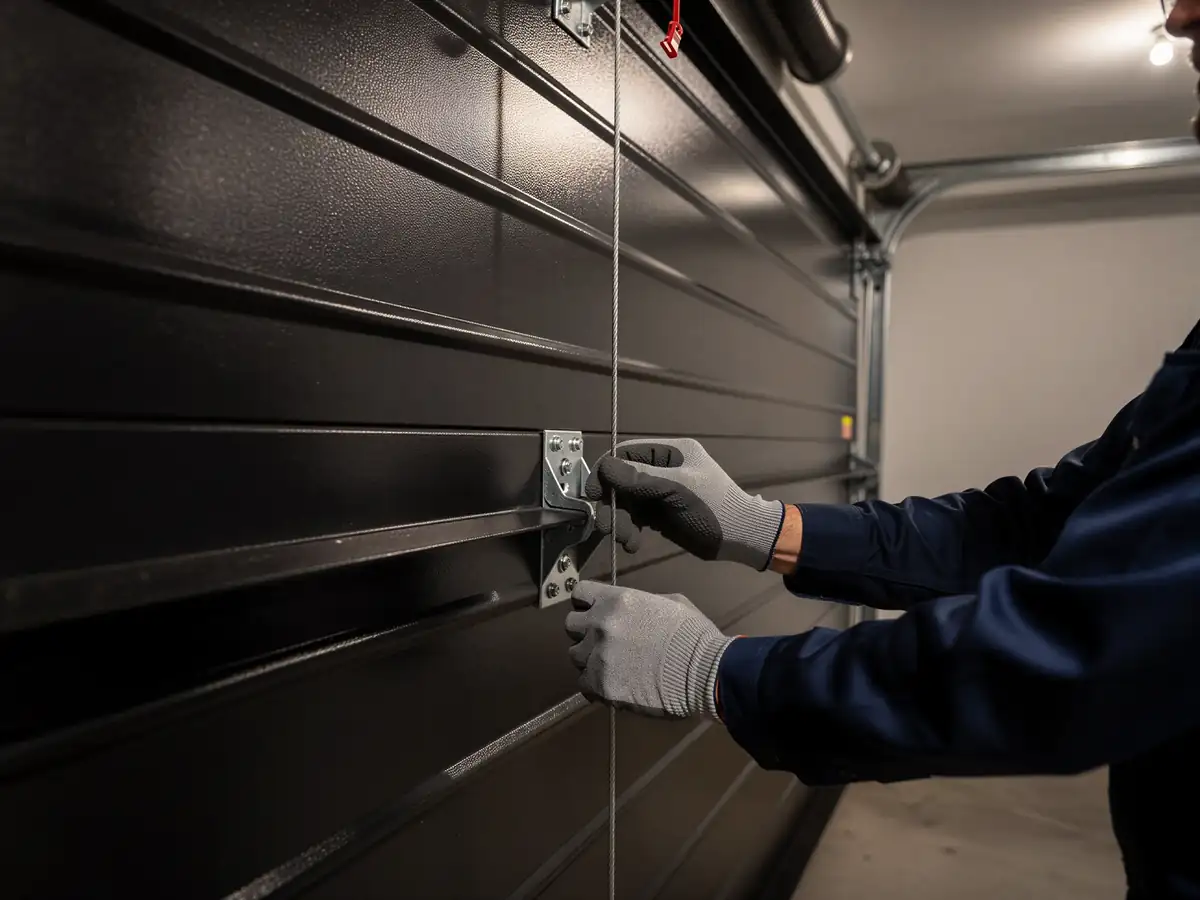
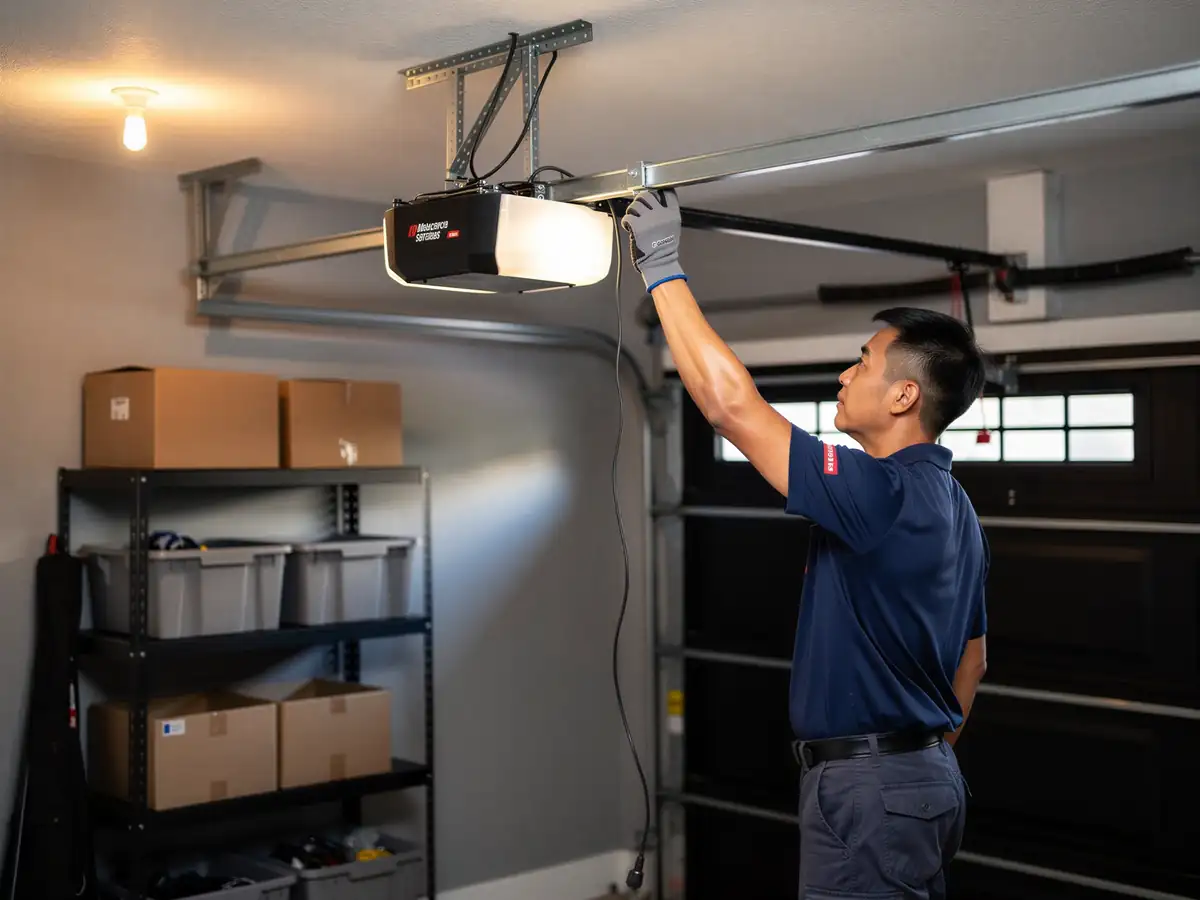
Pull the old chain-drive unit, check the header bracket it was mounted to (sometimes it needs reinforcing on older framing), hang the new rail, and set travel limits to match a door that's likely settled a few degrees out of square over three decades. Safety sensors get re-aimed low near the track, since a lot of 1987-era garages never had them installed to begin with - they were added to code after these houses were built.
Wiring the opener in is where the job either stays simple or doesn't
If there's already a working outlet near the unit, it's a short job. If the garage was never wired for one, that's additional work, and we'll quote it separately rather than bury it in the opener price. We don't rewire a whole garage as part of an opener call - that's an electrician's job if it goes beyond a single circuit.
Stocked Parts
The truck carries both chain-drive and belt-drive openers, since Clarcona's mix of attached and detached garages means some owners want the cheaper, louder chain unit and others want the quieter belt drive for a garage that shares a wall with a bedroom. Mounting brackets, rail sections, and standard safety sensor kits ride along too, because almost every job on a house this age needs at least one bracket replaced - the original hardware wasn't built to be reused after 35 years of vibration.
What we don't carry on the truck is specialty low-headroom hardware or anything built for a non-standard door size. If your garage has a track configuration outside the usual setup, that part gets ordered, and we'll tell you the lead time before we commit to a date.
What Can Go Wrong
The most common surprise on a Clarcona opener job is a header bracket that looks fine until you put weight on it - 1987 framing wasn't always sized for today's heavier belt-drive units, and we won't hang a new opener off wood that won't hold it. Second most common: a garage circuit that trips the moment the new opener draws its full startup load, which usually means the outlet or breaker predates the opener by decades.
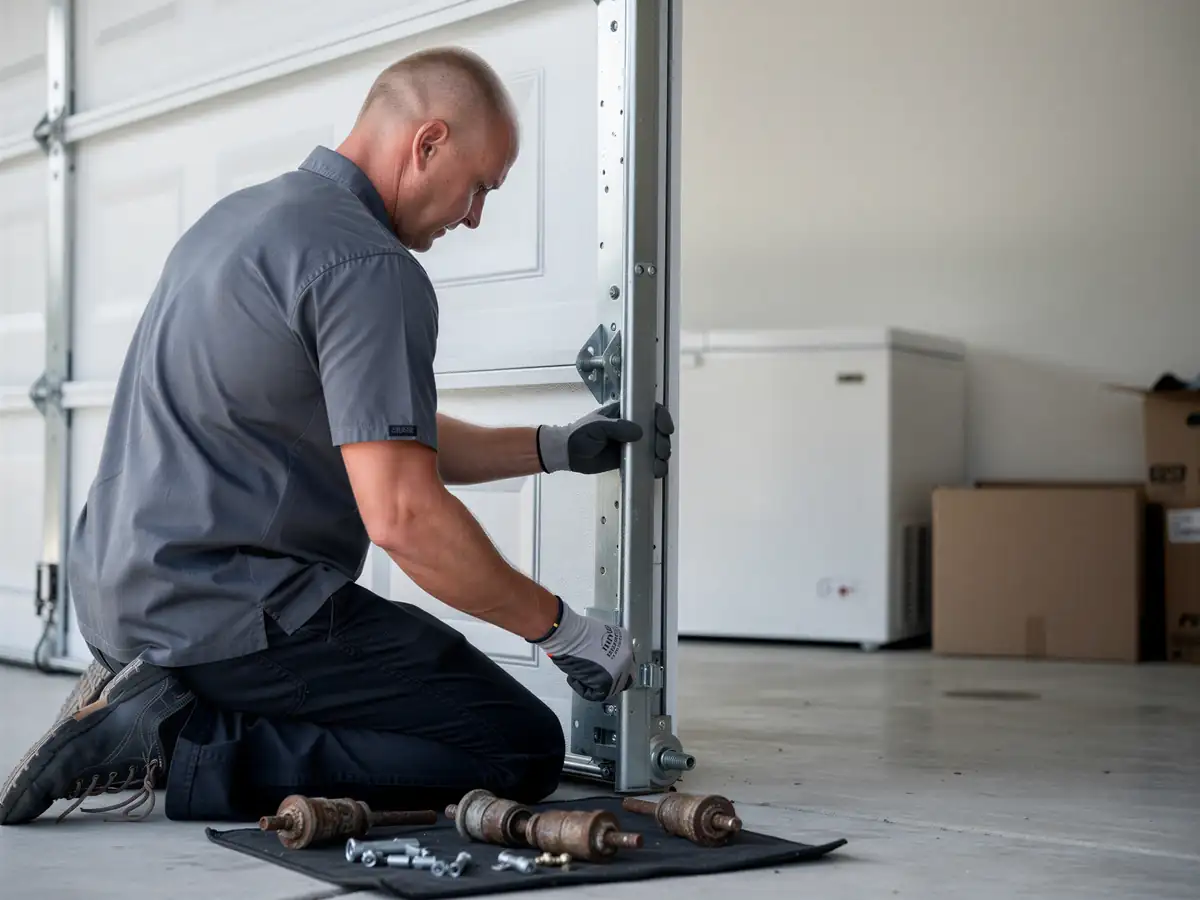
Less often, but it happens here more than in newer subdivisions: galvanized track hardware that's rusted at the mounting points from years of Florida humidity even though the climate here is officially mild. Rust like that isn't always visible until the bolts are out. None of these are reasons to walk away from an install, but they're reasons we check before quoting a flat price over the phone.