What It Costs
South Apopka's median household income sits at $54,427, noticeably below the wider service area's $84,955. That gap matters here because it shapes the calls we get: fewer full door replacements, more targeted repairs that get a door back in service without a four-figure bill. A broken spring or a worn roller set on a door from this era is usually a parts-and-labor job, not a teardown. We quote the repair itself, not a package, and we tell you up front if a part is going to be hard to source so there are no surprises when the truck shows up.
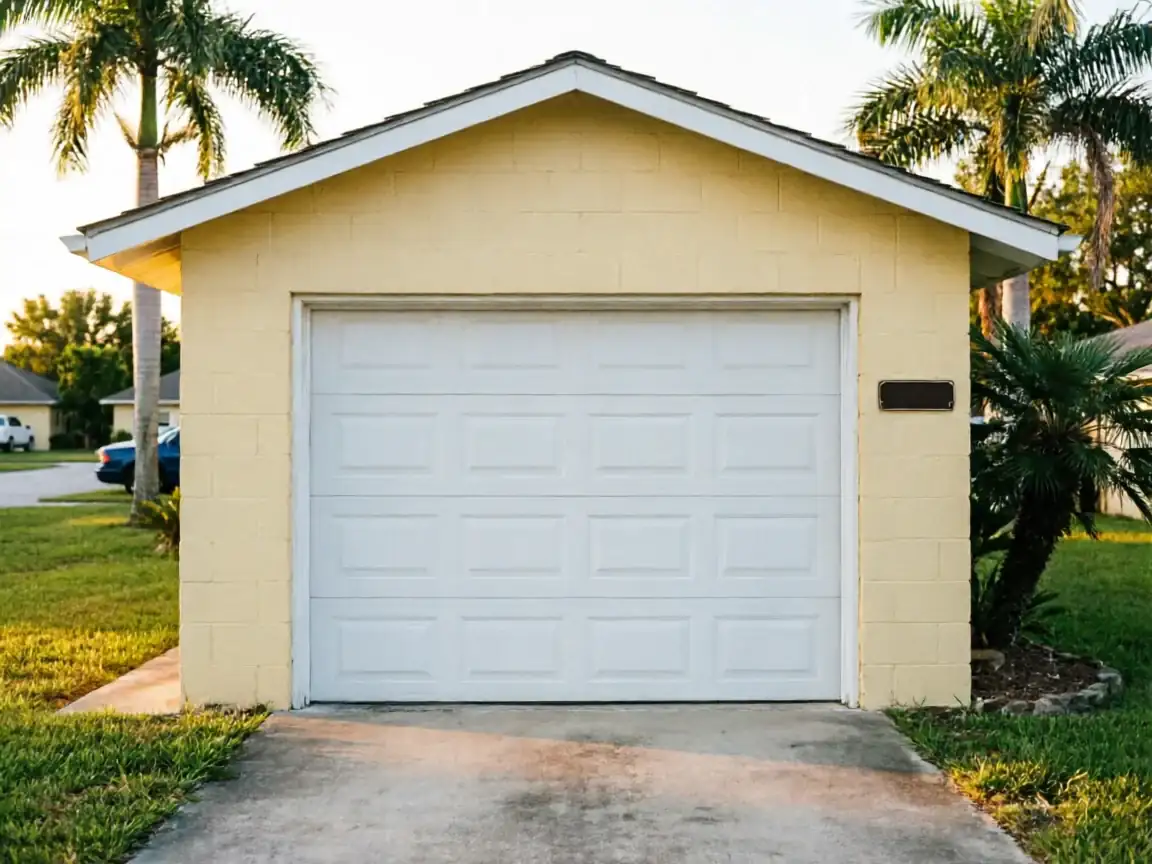
With 2,373 households in South Apopka, this isn't a neighborhood with a dozen door styles stacked on top of each other - it's a fairly consistent run of mid-1980s construction, which actually helps keep repair costs predictable. We're not guessing at hardware generations; we know roughly what's behind the panel before we open it.
What Can Go Wrong
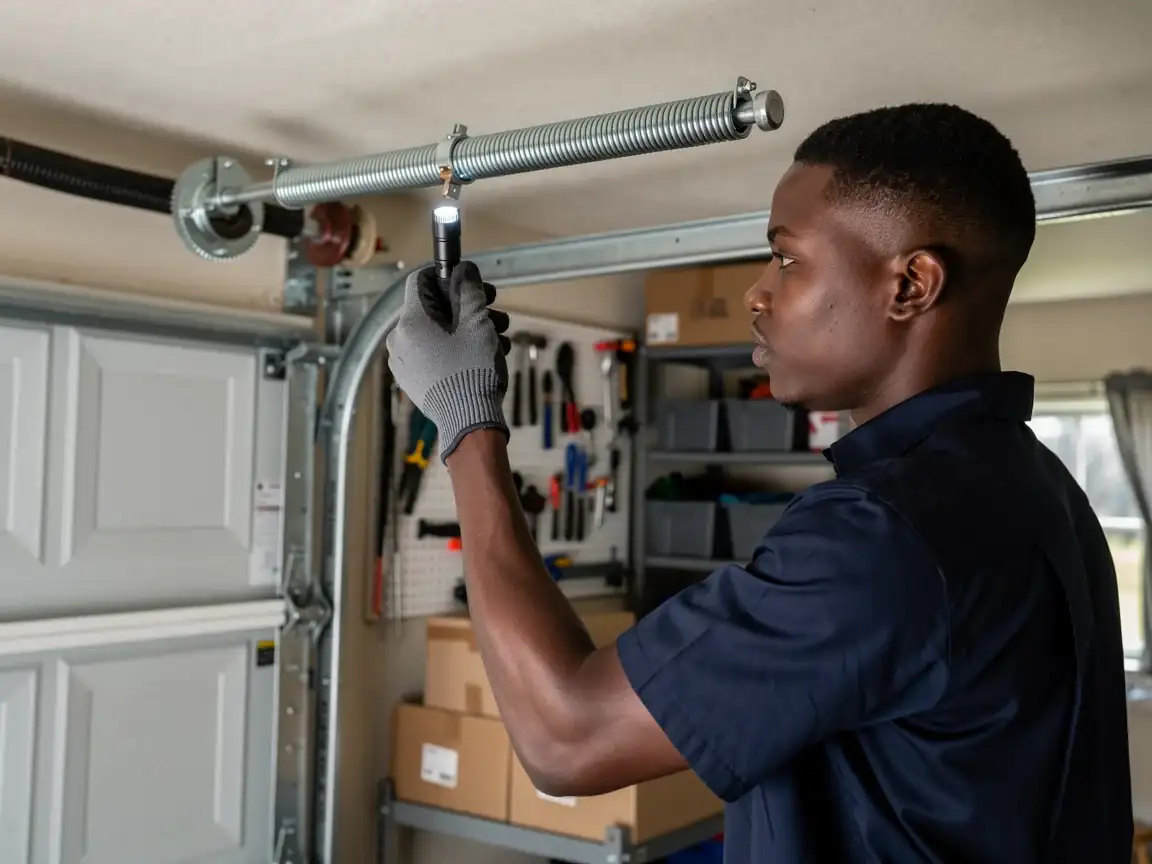
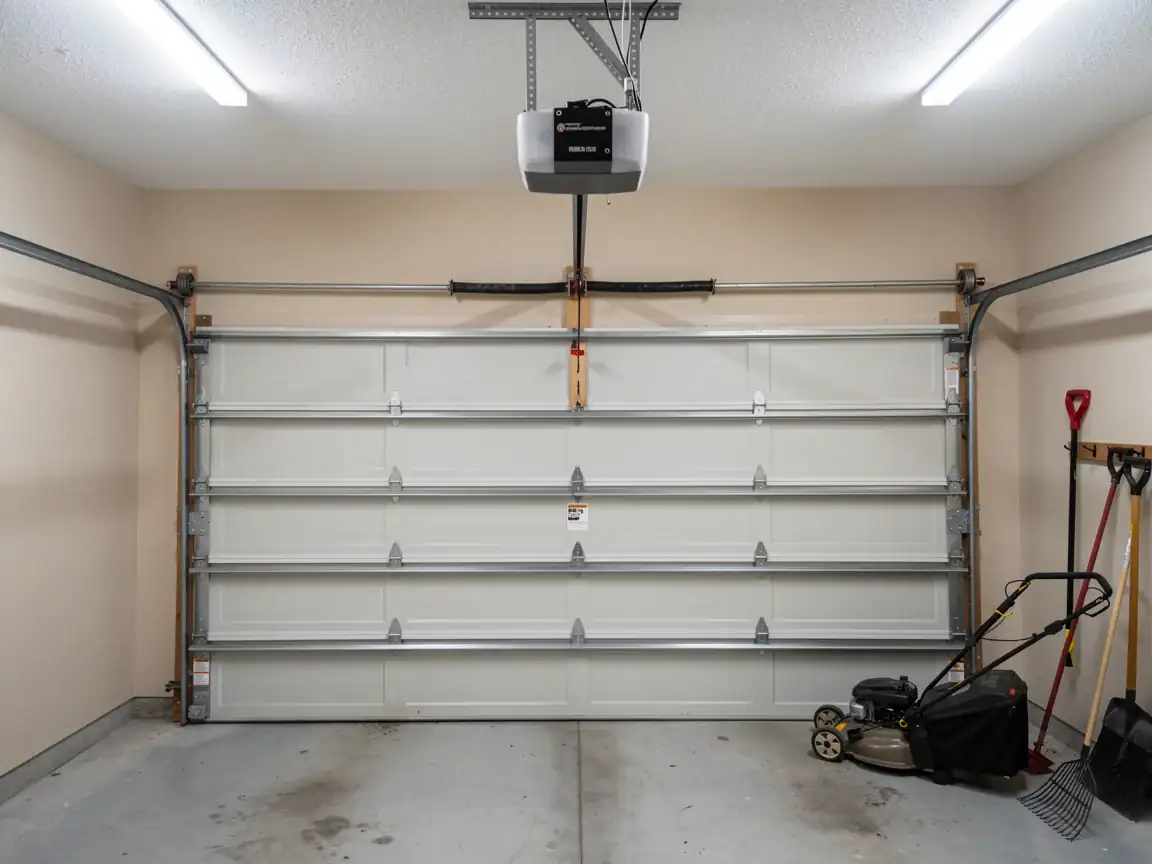
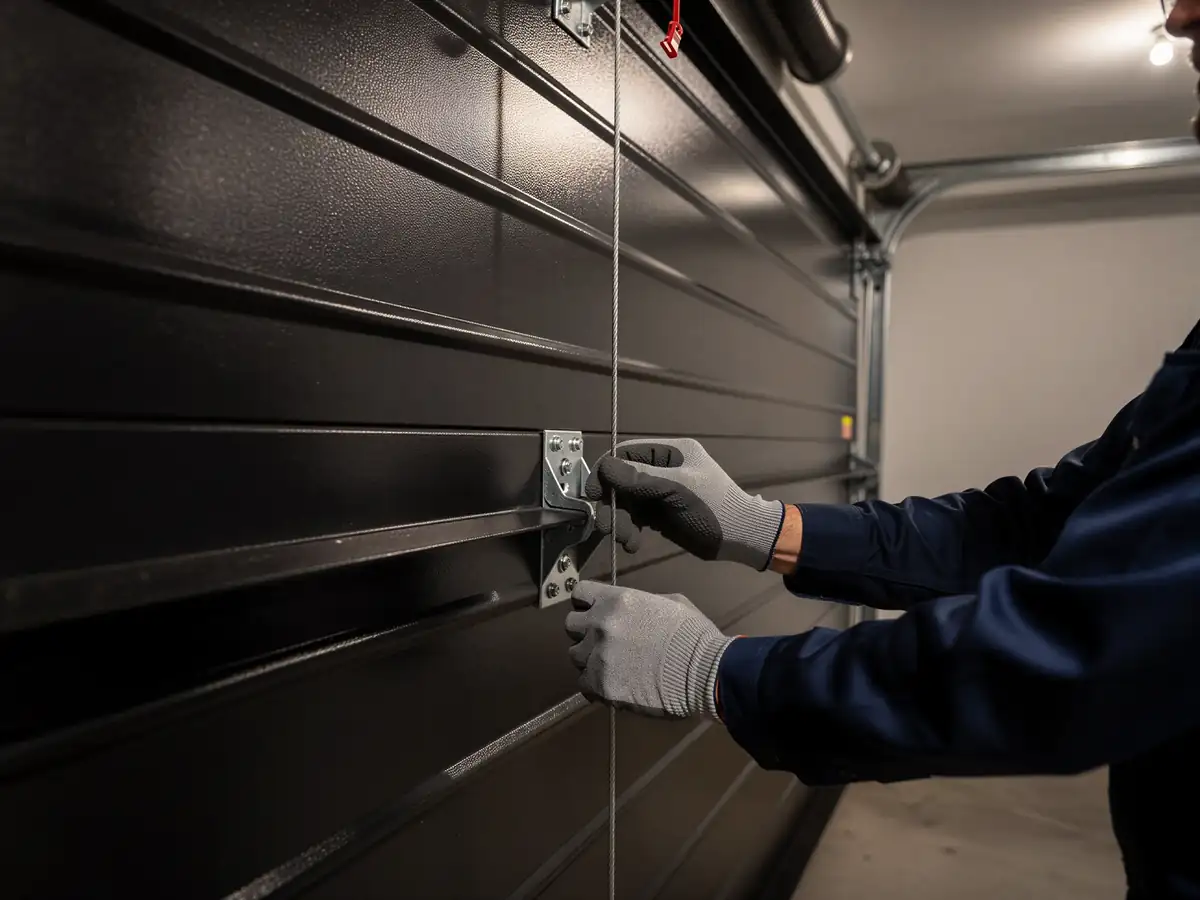
A steel sectional door built around 1984 has had close to four decades of cycles on its torsion spring, and most of those springs were never rated to last that long in the first place. Expect spring fatigue, cable fraying at the drum, and hinges that have stretched their mounting holes from years of flex. The mild temperate climate here doesn't add the humidity-driven rust problems you'd see further north, but UV and plain mechanical wear still take their toll on steel panels and the original tracks.
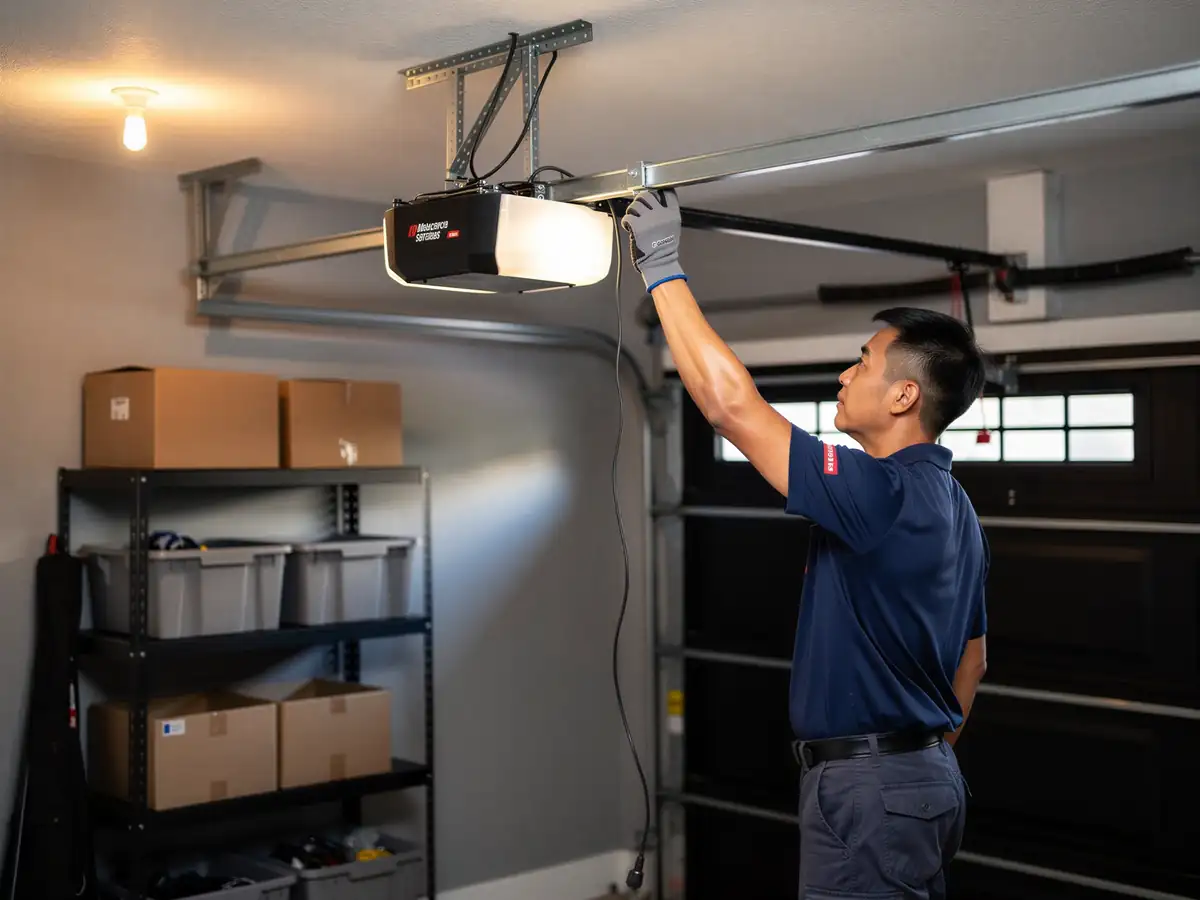
Openers from this build era, if they're still original, are chain-drive units with worn logic boards or dying capacitors. More commonly by now the opener has already been swapped once, so the mismatch we find is a newer opener bolted to decades-old track and rollers that were never upgraded alongside it.
What You Are Seeing
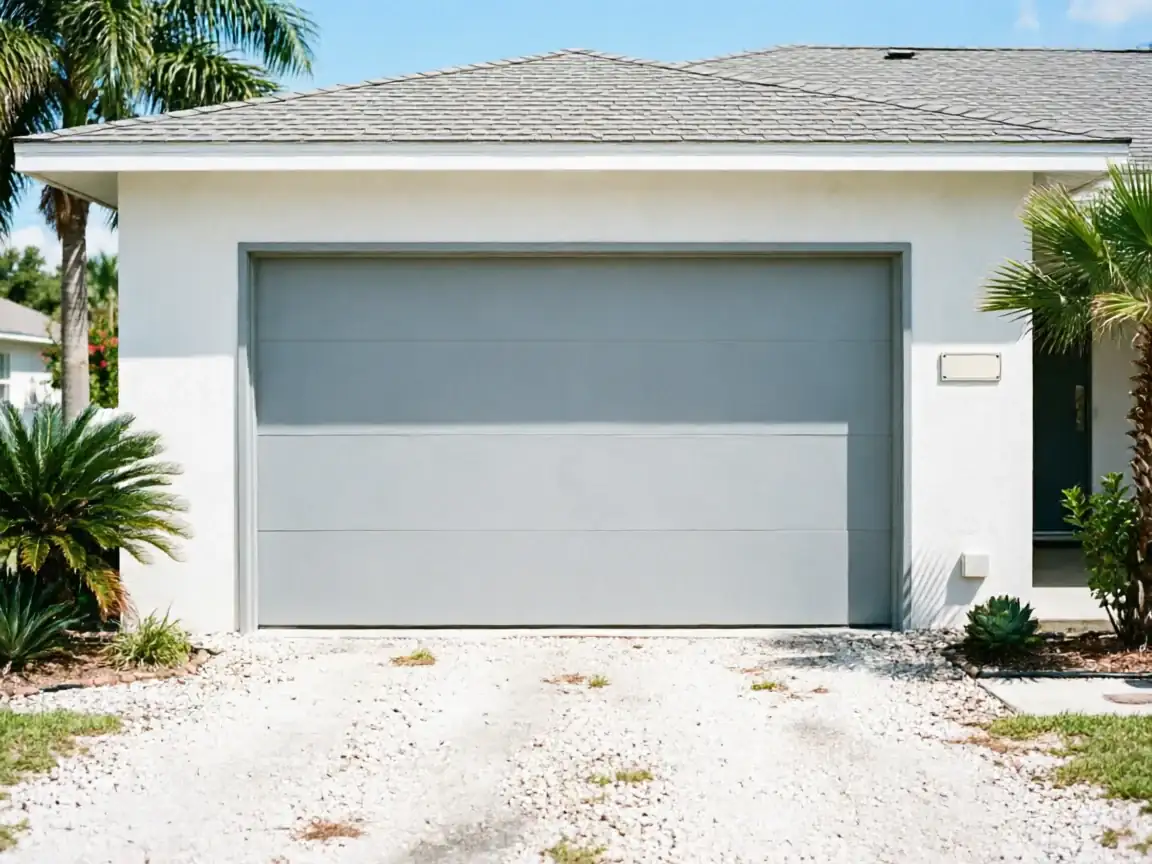
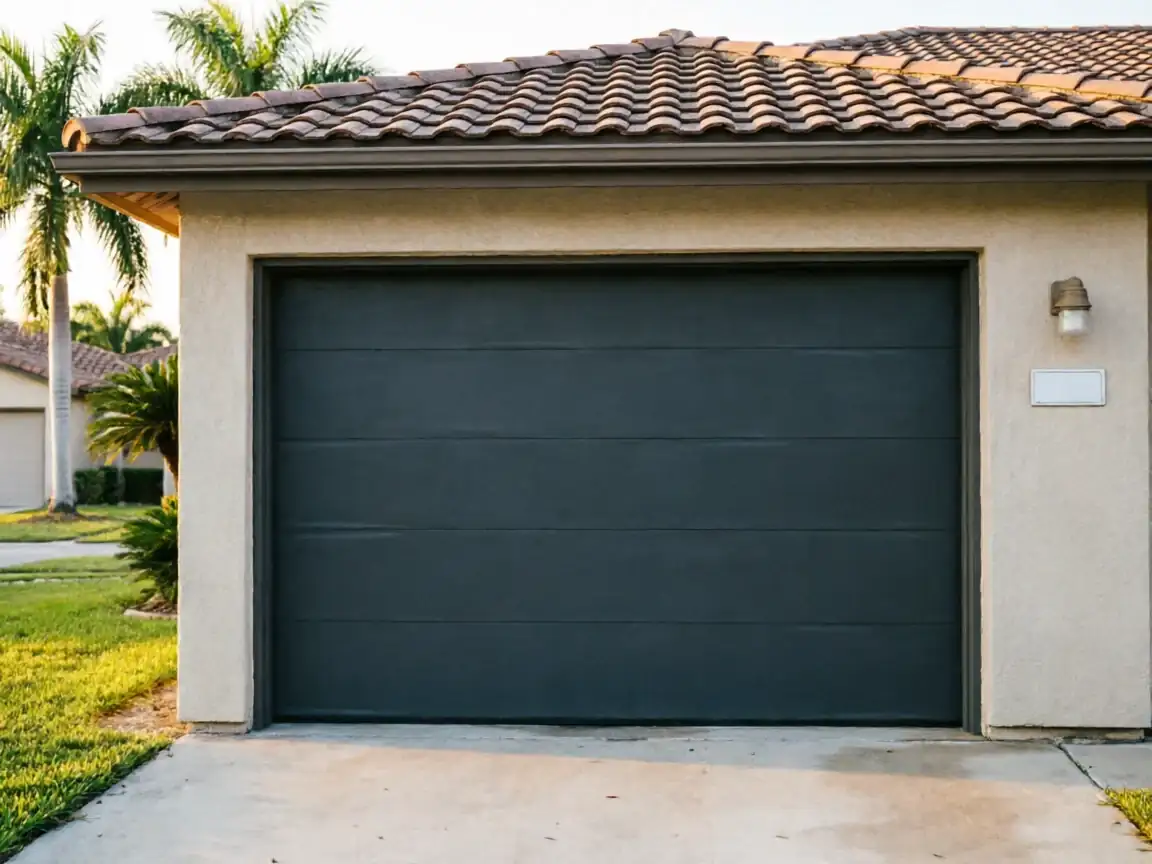
If your door is a single steel panel section that's bowed or denting in the middle
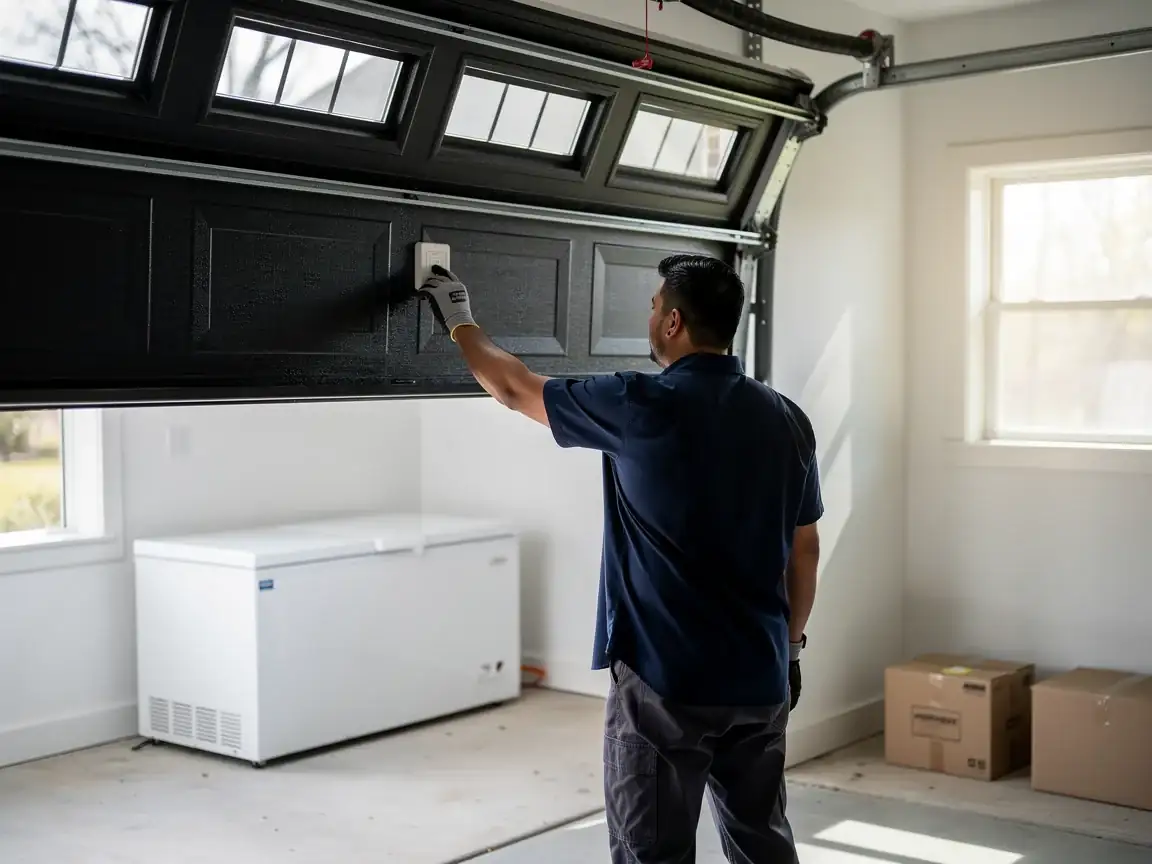
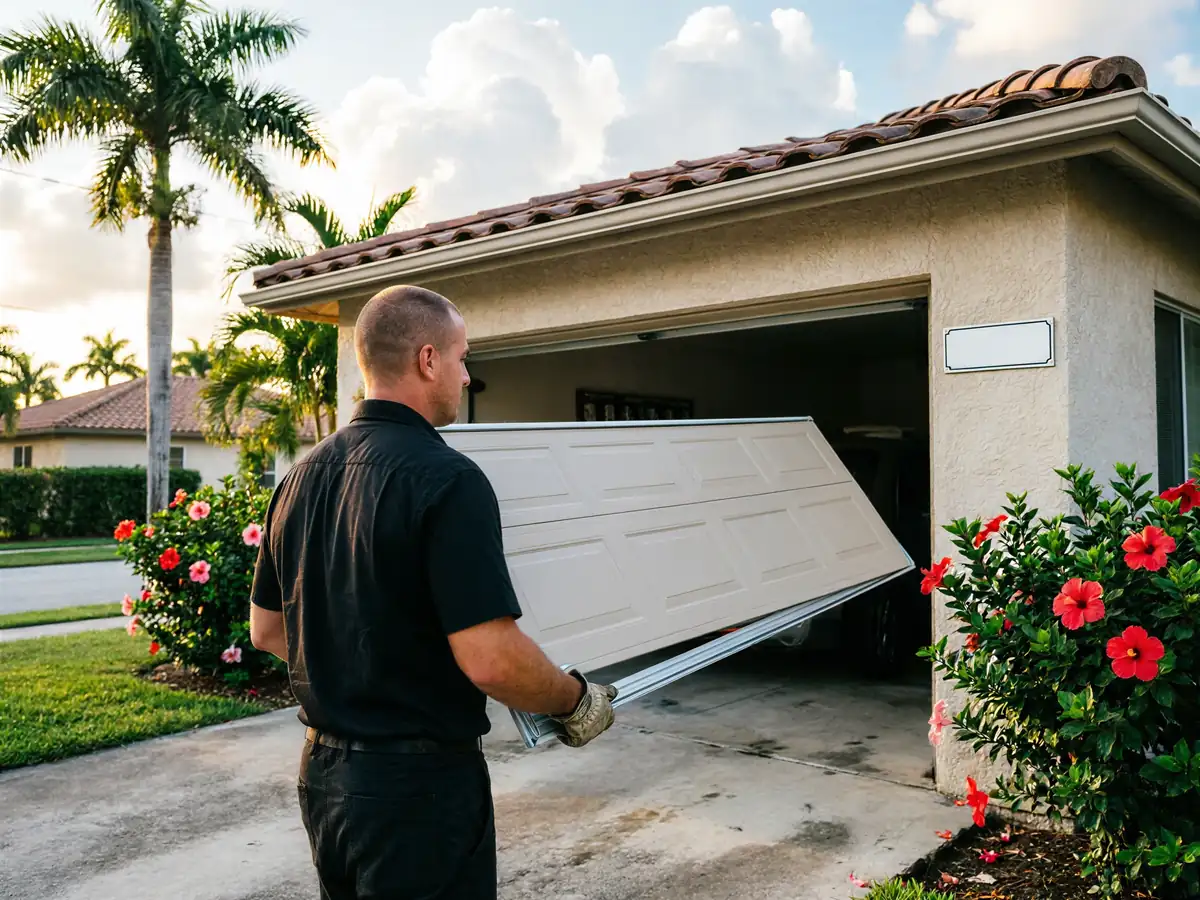
That's typical of non-insulated construction from the 1980s - thinner gauge steel that wasn't built to flex evenly over time. A door that slams the last foot of travel or reverses for no reason usually means the torsion spring has lost tension, not that the opener is failing.
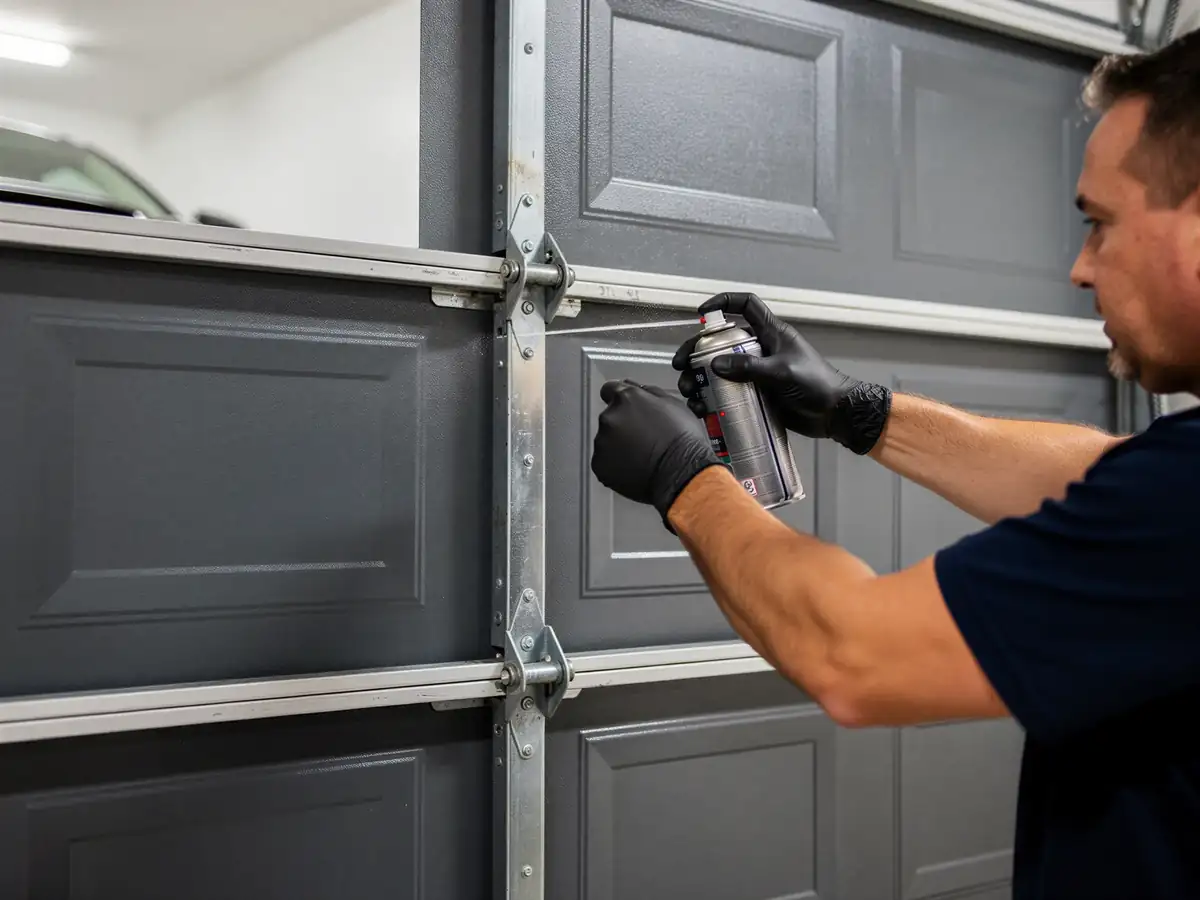
Grinding or a door that sticks halfway up often points to rollers that have worn their nylon coating down to bare metal
A common failure point once a door passes the 35-to-40-year mark. If the door is noticeably heavier to lift by hand than it used to be, that's the spring telling you it's close to done, and waiting on it usually ends with a snapped cable instead of a scheduled repair.
What the Repair Takes
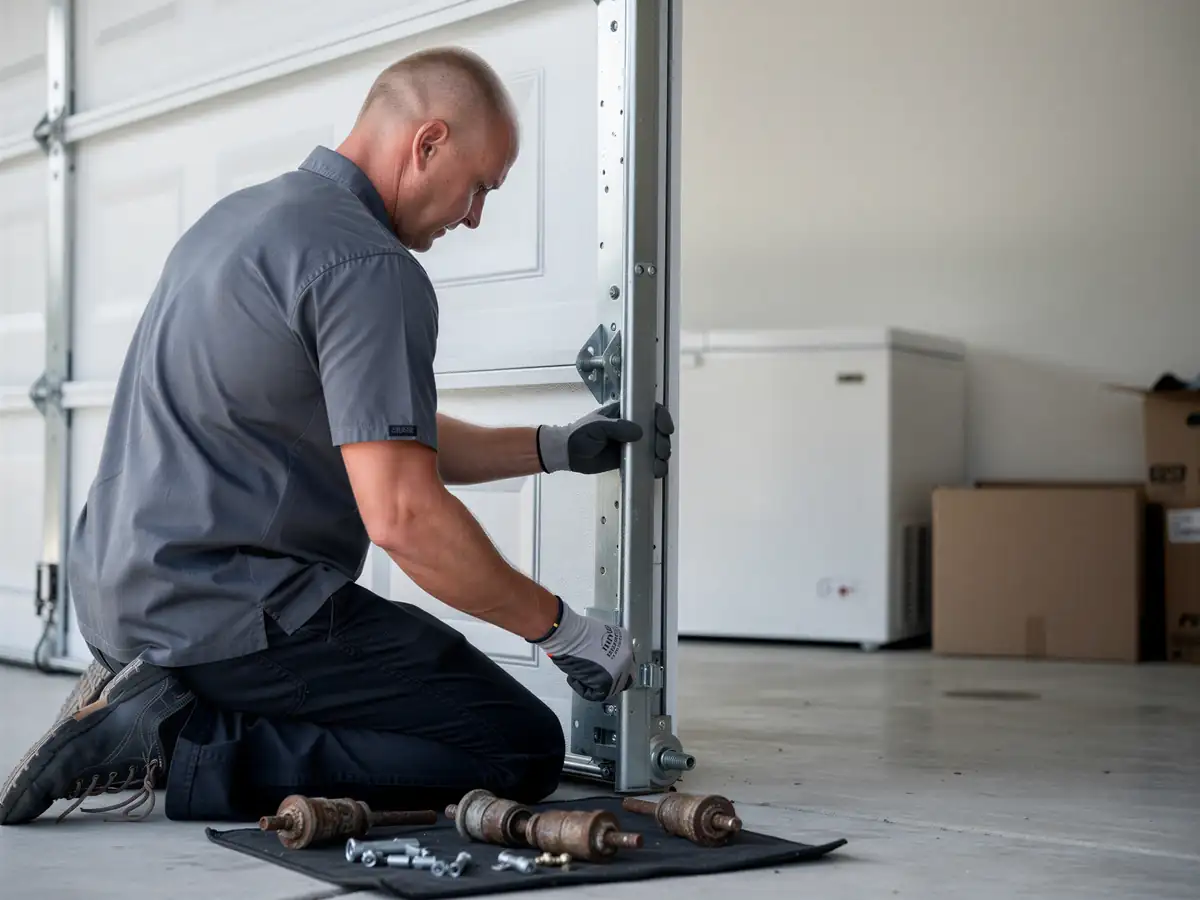
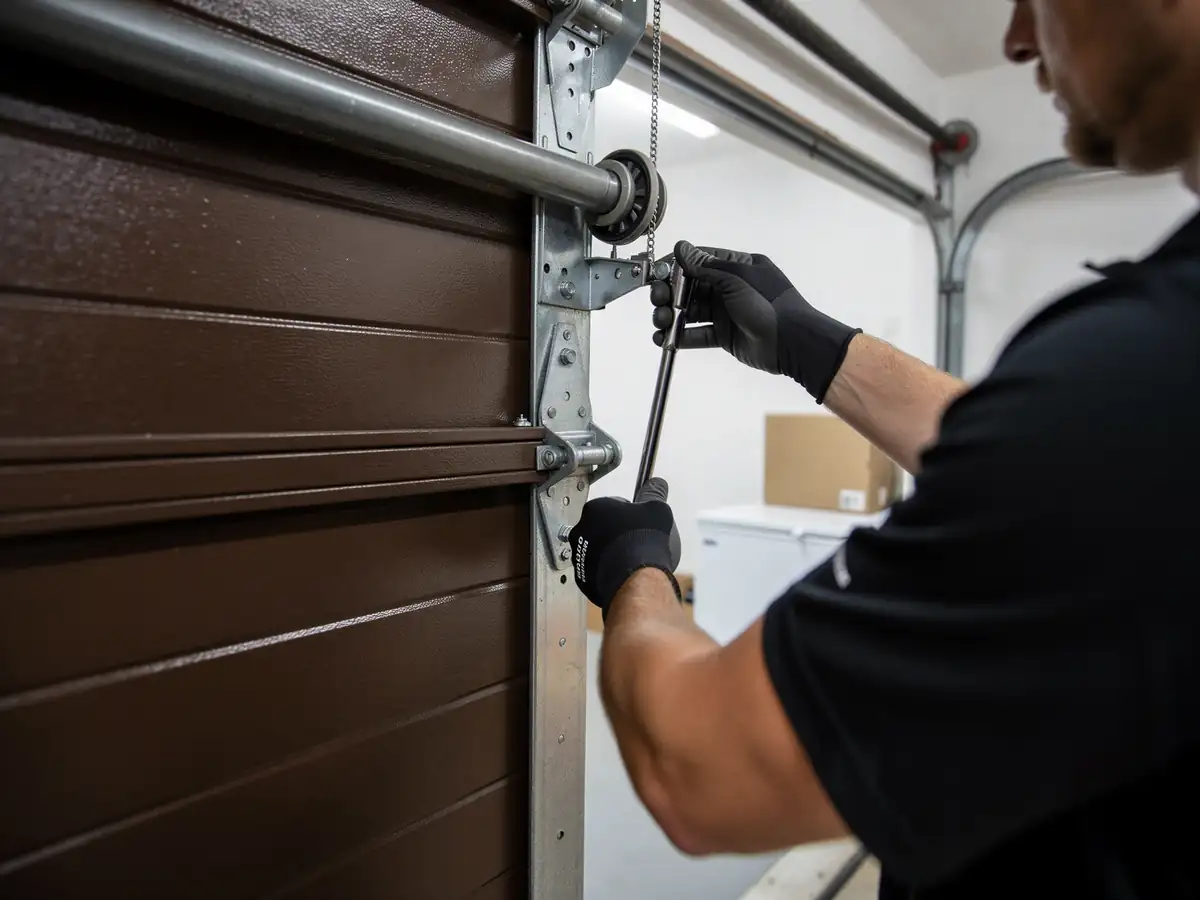
Most spring and cable jobs on a door this age take one visit. We bring torsion springs sized to match 1980s-era door weights, since original doors from this period tend to run heavier per square foot than current insulated models. Track and roller replacement is straightforward once we've confirmed the opening is still square - after 40 years some openings have settled slightly, which changes how the track gets shimmed.
The one thing we won't do is force a fix onto a door that's structurally failed. If the panels are rusted through at the bottom or the frame itself has shifted, replacement is the honest answer, and we'll say so instead of patching something that'll fail again in six months.
Stocked Parts
We carry torsion springs, extension springs, rollers, and standard-width track sections sized for the door dimensions common to 1980s construction, since that's what shows up most often on calls out this way. Cables, hinges, and bottom brackets are routine stock items too.
What we don't carry on the truck is obsolete opener circuit boards for discontinued models - if your original 1984 opener is still running and the board goes, that part sometimes has to be special-ordered, and we'll tell you honestly if that's the case rather than promising a same-visit fix we can't deliver.